
 0459 032 871
Grand pianos represent one of the most complex and structurally delicate instruments to relocate. Unlike upright pianos, grand pianos are built horizontally, with extended legs supporting a suspended body containing a cast iron plate and tensioned strings. Once these supporting legs are removed, the instrument becomes unstable and requires controlled stabilization.
Understanding how grand piano disassembly works — and why professional handling is strongly recommended — helps prevent structural damage, internal misalignment, and serious safety risks during relocation.
Why Grand Piano Disassembly Requires Specialized Handling
 Grand pianos typically weigh between 300 and 500 kilograms, with the majority of the weight concentrated in the main body. The cast iron plate alone can exceed 100 kilograms, creating a significant load that must be properly supported during disassembly.
The piano’s three legs function as structural supports. Once a leg is removed, the instrument cannot remain stable without external stabilization. Improper handling during this stage can cause sudden imbalance or tipping.
Additionally, the pedal assembly — known as the lyre — connects directly to internal mechanisms. Improper removal can damage these components and affect the piano’s performance.
Every step of grand piano disassembly must follow a precise sequence to maintain structural stability.
Equipment Required for Grand Piano Disassembly
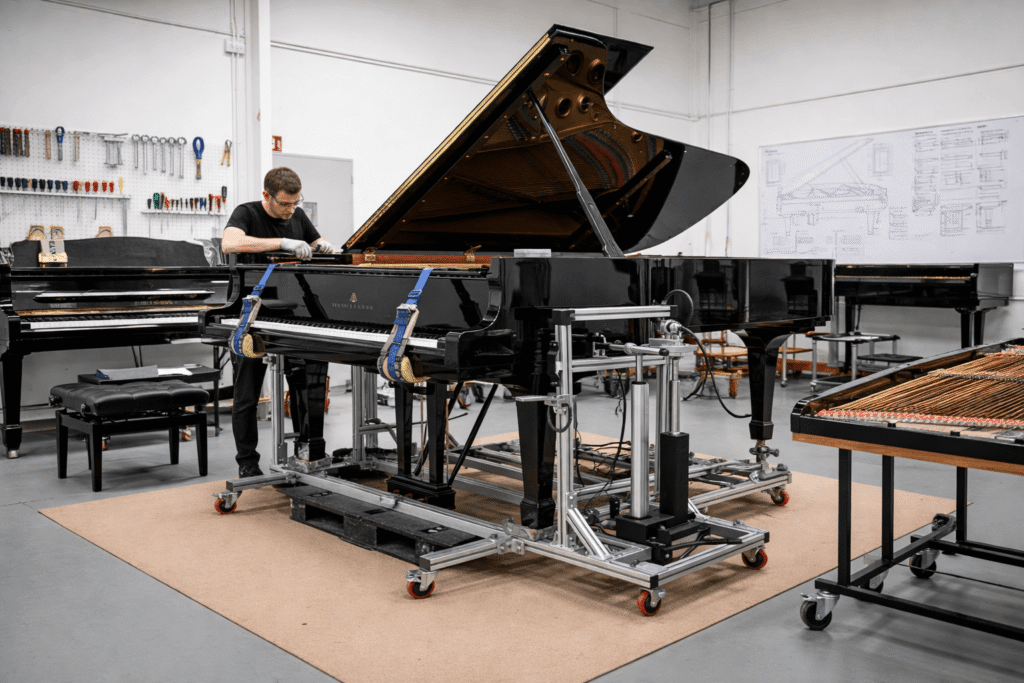 Grand piano disassembly requires specialized equipment designed to stabilize the instrument throughout the process.
Professional movers use:
- Piano skid boards designed to support the full body weight
- Heavy-duty lifting straps for controlled positioning
- Stabilization supports to prevent imbalance
- Protective padding to prevent surface damage
- Professional moving dollies rated for heavy loads
The skid board is essential. Once the legs are removed, the piano must be mounted securely to the skid board to maintain stability during transport.
Step 1: Remove the Piano Lid
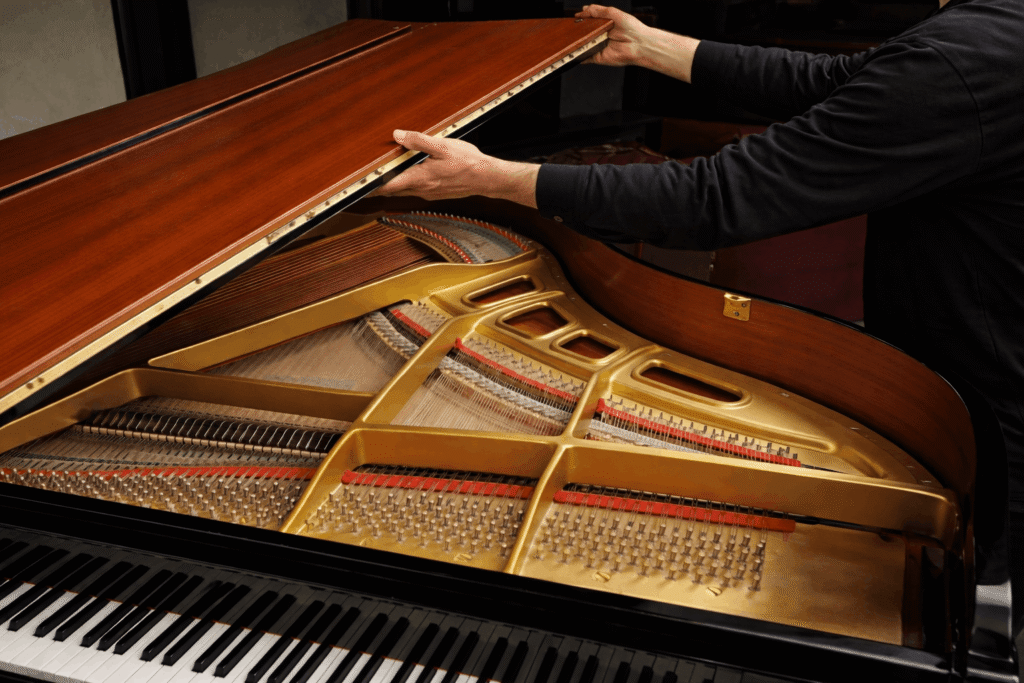 The piano lid is removed first to reduce overall size and prevent accidental damage during handling.
Locate the hinges connecting the lid to the piano body. Carefully detach the lid while supporting its weight. Protect the lid using padding and store it securely.
Removing the lid improves handling control and reduces risk during repositioning.
Step 2: Remove the Pedal Assembly (Lyre)
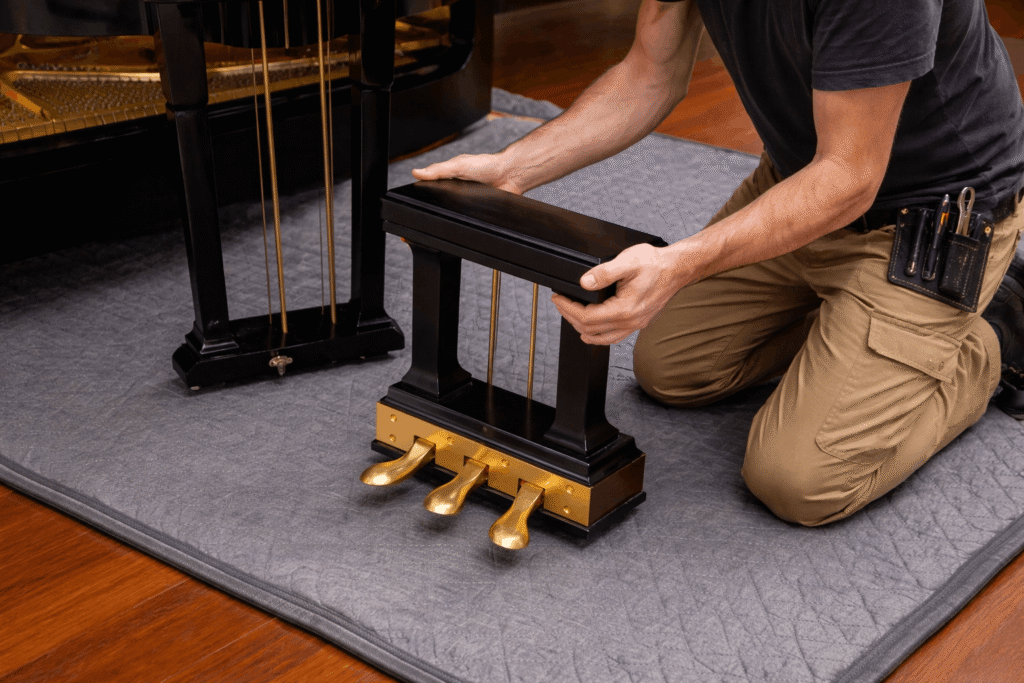 The pedal assembly must be removed before detaching the piano legs.
Carefully locate the mounting points securing the lyre to the piano body. Support the assembly while removing fasteners to prevent stress on internal components.
Store the pedal assembly safely and protect it with padding.
Step 3: Secure the Piano Body Using a Skid Board
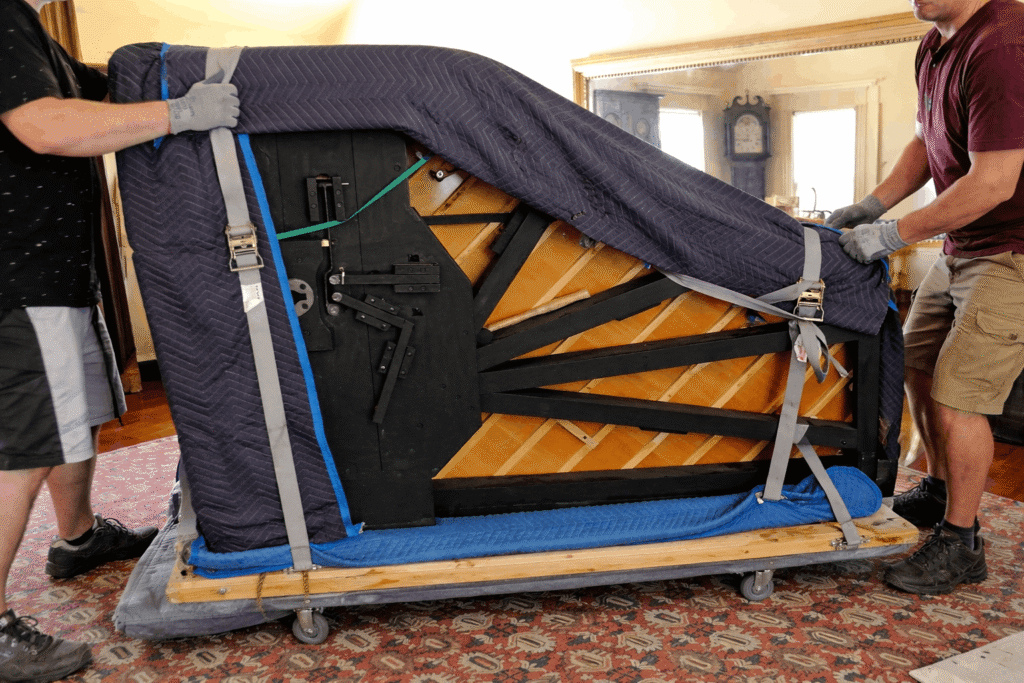 Before removing the legs, the piano must be fully stabilized using a professional skid board.
With proper lifting assistance, gently tilt the piano and position the skid board beneath the body. Secure the piano firmly using straps to prevent movement.
This step ensures stability before removing structural supports.
Step 4: Remove the Piano Legs
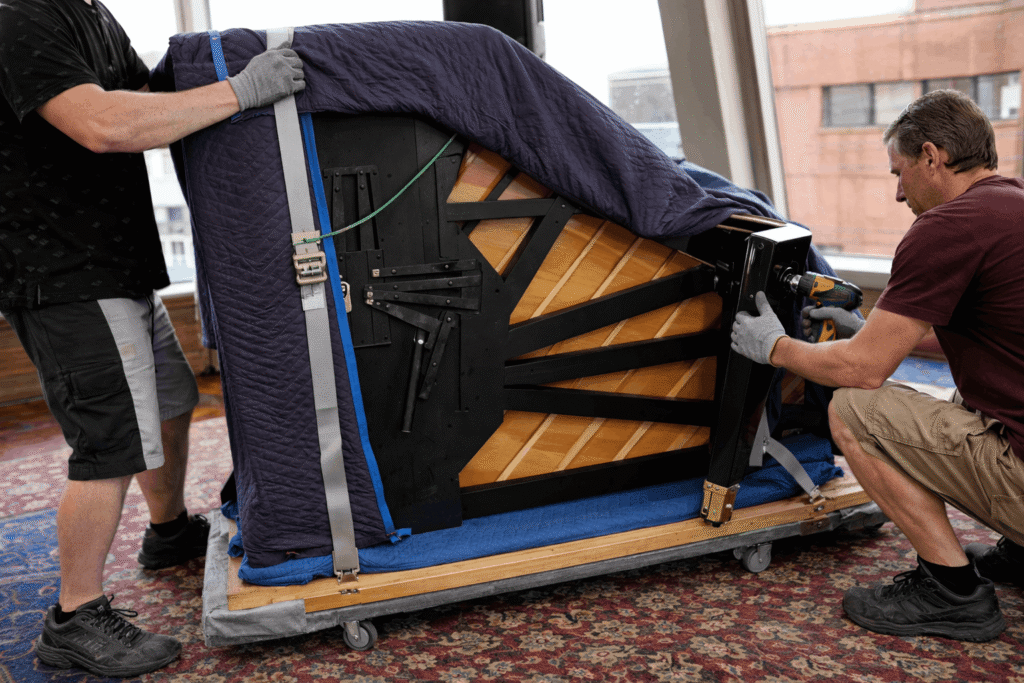 Once the piano body is fully secured, the legs can be removed safely.
The leg opposite the keyboard is typically removed first. The remaining legs are removed once the piano is properly supported on the skid board.
Each leg should be stored securely and protected from damage.
Removing the legs reduces the piano’s size and prepares it for safe transport.
Step 5: Secure the Piano for Transport
 After the legs and pedal assembly are removed, the piano body remains secured to the skid board.
Protect all exposed surfaces using padding to prevent scratches and structural damage.
At this stage, the piano is ready for relocation.
Why Professional Grand Piano Disassembly Is Strongly Recommended
Grand piano disassembly involves managing significant weight distribution and structural instability. Without proper equipment and experience, the instrument can shift unexpectedly, creating serious safety risks.
Professional piano movers are trained to:
- Stabilize the instrument safely
- Manage weight distribution
- Protect internal mechanisms
- Prevent structural damage
Professional handling ensures the piano remains protected throughout relocation.
Situations Where Grand Piano Disassembly Is Necessary
Grand piano disassembly may be required when:
- Moving between homes
- Navigating staircases
- Relocating to upper floors
- Transporting through narrow access points
- Preparing for long-distance transport
Disassembly ensures the piano can be moved safely without damaging structural components.
Preparing a Grand Piano for Safe Transport and Reassembly
Professional movers evaluate the relocation route, prepare stabilization equipment, and follow a controlled sequence to protect the instrument throughout disassembly and transport.
Proper handling ensures the piano can be reassembled safely and returned to proper playing condition.
Skip the hassle of DIY or the risk of damaging your grand piano. Let our professional team handle the heavy lifting. Give us a call today to learn more about our process.
Grand Piano Disassembly Requires Professional Precision
Grand piano disassembly is a highly specialized process requiring precise handling, stabilization equipment, and coordinated lifting techniques. The instrument’s weight distribution and structural design create risks that must be managed carefully.
Professional piano movers ensure the disassembly, transport, and reassembly process is completed safely, protecting both the instrument and those handling it.
Frequently Asked Questions
What happens if grand piano legs are removed incorrectly?
If grand piano legs are removed without proper stabilization, the instrument can collapse or shift suddenly. This can cause severe structural damage and serious injury due to the piano’s weight.
Can a grand piano collapse during disassembly?
Yes. Once the legs are removed, the piano body must be supported using a skid board or stabilization equipment. Without proper support, the instrument can collapse or tip over.
Why is a skid board required for grand piano disassembly?
A skid board provides structural support for the piano body after the legs are removed. It distributes weight evenly and prevents instability during transport.
Can you disassemble a grand piano yourself safely?
Grand piano disassembly is not recommended without professional experience. The instrument’s weight, structure, and instability require specialized equipment and coordinated handling.
Why should professionals disassemble grand pianos instead of homeowners?
Professional movers use proper lifting equipment, stabilization tools, and handling techniques. This ensures the instrument remains stable and protected throughout the disassembly and relocation process.
What equipment do professionals use that homeowners do not have?
Professional movers use:
- Skid boards
- Heavy-duty lifting straps
- Stabilization supports
- Professional-grade dollies
- Protective padding
These tools ensure safe handling.
Can a grand piano fit through standard doorways without disassembly?
Most grand pianos cannot fit through standard doorways without removing the legs and pedal assembly. Disassembly reduces the instrument’s size and allows safe relocation.
When is grand piano disassembly absolutely necessary?
Disassembly is required when navigating:
- Narrow doorways
- Staircases
- Upper floors
- Tight access points
These conditions prevent safe relocation of the piano intact.
Can grand pianos be transported without removing the legs?
In most cases, the legs must be removed to ensure stability and reduce size. Transporting a grand piano without removing the legs significantly increases risk.
How much does professional grand piano disassembly cost?
Professional grand piano disassembly typically ranges between $200 and $500 depending on accessibility, equipment required, and relocation complexity.
What affects grand piano moving and disassembly cost?
Cost depends on:
- Piano size and weight
- Accessibility challenges
- Distance of transport
- Required equipment
- Number of movers
More complex moves increase cost.
Does insurance cover damage during grand piano relocation?
Professional piano movers typically provide insurance coverage for relocation. This protects the instrument from damage during disassembly, transport, and reassembly.



 Address
 Phone
Phone Email
Email
