
 0459 032 871
Decluttering can feel like a huge task — every cupboard, drawer, and corner seems to hold years of “just in case” items. Knowing where to start is often the hardest part.
If your home feels crowded or you’re preparing for a move, this guide will show you how to declutter efficiently and with purpose. You’ll learn practical steps to sort, simplify, and organise your space — from the first drawer you tackle to the final box you pack.
By breaking the process into clear, achievable actions, you’ll create more room, less stress, and a smoother move into your next home.
Why Decluttering Before You Move Matters
Moving home is a fresh start — but if you pack everything you own, you’re simply relocating the clutter, not reducing it. Decluttering before a move helps you let go of what no longer serves you, making your next home easier to organise, unpack, and enjoy.
When you skip this step, the cost isn’t just visual — it’s financial and emotional. Each extra box you move adds to your removal bill, storage costs, and stress levels.
| Expense Type | Extra Cost (approx.) | Why It Rises When You Don’t Declutter |
| Extra Boxes & Packing Supplies | $100–$200 | More items mean more materials and tape. |
| Truck Space & Labour Time | $250–$400 | Longer loading and unloading times. |
| Temporary Storage Fees | $99–$500 per month | Paying to store things you rarely use. |
| Insurance / Handling | $50–$150 | Covering items that may not be worth keeping. |
Even beyond cost, clutter takes a mental toll. It can heighten stress, reduce focus, and make you feel less at ease in your own space. Studies link messy environments with higher cortisol levels — your body’s main stress hormone.
Decluttering before you move gives you a chance to reset your environment and your mindset. By keeping only what adds value or joy, you’ll enter your new home lighter, calmer, and ready to start fresh.
How to Declutter Your Home Step by Step
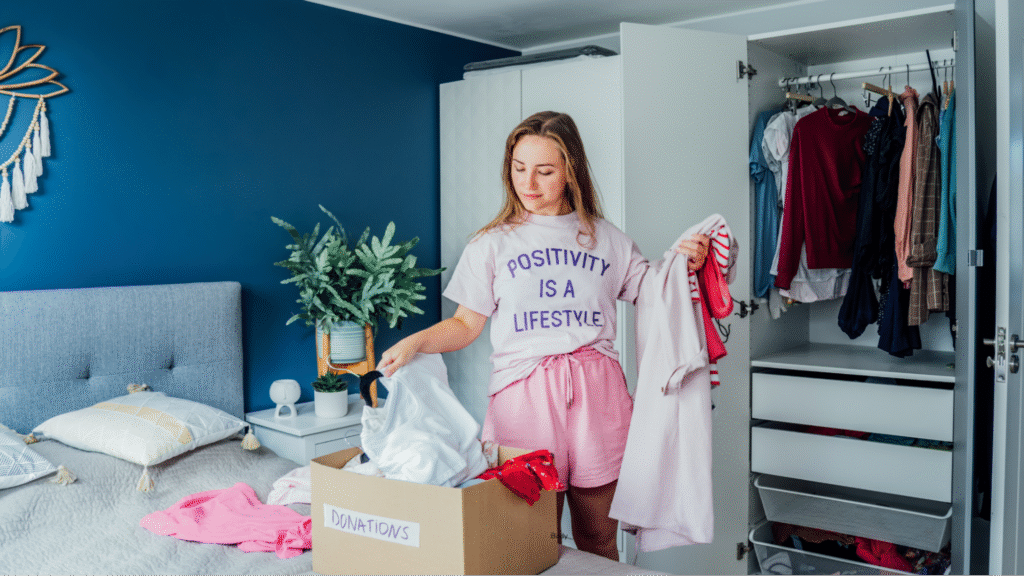
Decluttering doesn’t have to mean a full weekend lost to sorting boxes and chaos. With the right approach, you can simplify steadily — one drawer, shelf, or room at a time. Here’s a step-by-step guide to make the process lighter and more achievable.
1. Start with Clear, Simple Goals
Big goals like “declutter the whole house” can feel impossible. Instead, set smaller, specific targets:
- Clear one drawer or cupboard each day.
- Finish the kitchen counters by the weekend.
- Dedicate one hour every Saturday to sorting.
Each small win builds momentum. The more you see progress, the easier it becomes to keep going.
Try this: Set a 15-minute timer and see how much you can clear before it dings. Short bursts beat long marathons.
2. Use the Four-Box Method
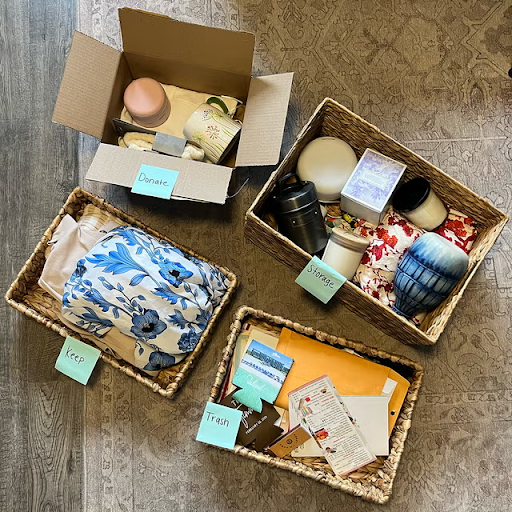
The classic Four-Box Method helps you make fast, confident decisions. Label four boxes (or bags):
Keep | Donate | Bin | Relocate
Every item must go somewhere — no “maybe later” piles. This method removes hesitation and gives you visible results quickly.
Pro tip: Start with smaller spaces like drawers or benches where the difference shows immediately. Visible progress keeps motivation high.
3. Begin in Easy Areas First
Avoid starting with sentimental items — they slow you down.
Instead, pick low-emotional areas such as:
- Junk drawers
- Bathroom shelves
- Kitchen utensils
- Linen cupboards
These quick wins help you build rhythm and confidence before moving on to harder spaces like photos or keepsakes.
4. Declutter by Category, Not Just Room
When you’re ready for bigger decisions, switch to a category-based approach inspired by the KonMari Method:
Clothes → Books → Papers → Komono (miscellaneous) → Sentimental
This approach helps you see duplicates and patterns.
Ask yourself: “Does this add value to my new home or my life now?”
Quick win rule: Try the 20/20 method — if you can replace something in under 20 minutes for under $20, let it go.
5. Set Short Decluttering Sessions
It’s better to do three focused 20-minute sessions than one exhausting day-long effort.
Work in short bursts and stop when your focus drops — it keeps your energy and motivation steady.
Create a playlist or set a timer for 30 minutes. When it’s done, so are you.
6. Create a “Maybe” Box
If you’re unsure about an item, don’t overthink it. Place it in a “Maybe” box and write today’s date on the lid.
If you haven’t used or missed anything inside after 90 days, donate or recycle it guilt-free.
This helps you stay decisive without feeling pressured to be perfect.
7. Go Digital Where You Can
Paper clutter adds up quickly. Scan or photograph old documents, warranties, and receipts.
Store them securely online or in labelled digital folders.
You’ll reduce physical clutter and make things easier to find later.
8. Revisit Each Room with a Clear Plan
Once your categories are sorted, walk through each room again to tidy what remains.
Focus on placement and flow — where each item belongs and how it’s used.
Here are some quick room-by-room ideas:
- Kitchen: Clear benchtops and group cooking tools by use.
- Bedroom: Keep only clothes you wear and love.
- Bathroom: Discard expired products and empty bottles.
- Living Room: Limit décor to what adds warmth and comfort.
9. Make Space for Daily Essentials
Create “landing zones” in high-traffic areas for the things that pile up easily — keys, mail, shoes, and devices.
Use trays, baskets, or small shelves to contain them neatly.
This reduces daily clutter and makes tidying take seconds, not hours.
10. Let Go of ‘Someday’ Items
Everyone has a few “just in case” items hiding in cupboards.
Ask yourself three questions:
- Have I used this in the last year?
- Would I buy it again today?
- Does it suit the life I’m living now?
If not, it’s time to let it go. “Someday” rarely comes — and every unused item takes up space and energy.
11. Declutter Together
Decluttering sticks best when everyone joins in.
Invite your family or housemates to take part — make it a team effort.
Try short challenges:
- 15-minute room resets
- “Who can fill the donate box first?” games
- Reward milestones with something fun (movie night, takeaway dinner)
It turns decluttering from a chore into something communal and positive.
12. Hold Off on Storage Buys Until You’re Done
It’s tempting to buy storage bins before you’ve finished sorting, but resist that urge.
Only once you know what’s staying should you buy what’s needed to keep it organised.
Rule to remember: Organisation starts with less stuff, not more containers.
What to Do With the Items You Declutter
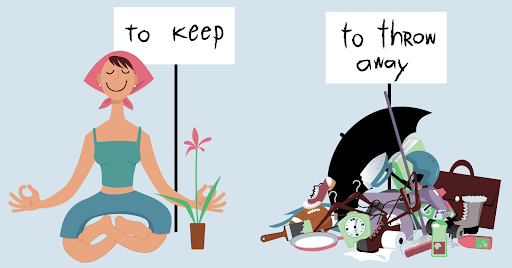
Once you’ve sorted through everything, the real challenge is deciding where it all goes.
Throwing things away should be the last resort — there are smarter, more sustainable ways to pass items on, clear space, and even earn a little back.
Here’s how to handle each category responsibly:
Donate
If it’s still in good condition, someone else can use it. Clothes, kitchenware, toys, and small furniture pieces can be donated to local charities and community organisations.
Common donation options across Australia include:
- Vinnies (St Vincent de Paul Society) – accepts clothing, books, and household goods.
- The Salvation Army – great for furniture and homewares.
- Red Cross Shops – often take quality clothing and accessories.
- Local op shops – perfect for quick drop-offs close to home.
Tip: Always check donation centre guidelines before dropping items off. They can’t always accept bulky or damaged items.
Recycle
Recycling is the best option for items beyond donation but still reusable in parts.
- Use your local council’s hard rubbish collection or transfer stations for metal, e-waste, and large household items.
- For batteries, light globes, or electronics, look for drop-off points through Planet Ark’s RecyclingNearYou.com.au.
- Shred and recycle old paper documents once digitised.
Recycling properly not only reduces landfill but also keeps your move eco-friendly.
Sell
If an item still has value, consider selling it. It’s a simple way to offset your moving costs.
Popular platforms in Australia include:
- Facebook Marketplace – ideal for quick local sales.
- Gumtree – for furniture, appliances, and larger items.
- eBay Australia – perfect for collectables, clothing, or electronics.
Quick win: Set a 7-day rule — if it doesn’t sell within a week, donate it instead. It keeps momentum high and avoids “resale clutter.”
Dispose Safely
Some things just need to go — but do it responsibly.
- Drop off old paint, chemicals, and batteries at council collection points.
- For expired medications, use your local pharmacy’s disposal bin.
- Never pour chemicals or oils down the drain — most councils offer scheduled disposal days for these items.
Decluttering shouldn’t harm the environment, and safe disposal ensures your home and community stay clean.
How to Maintain a Clutter-Free Home
 Decluttering once feels great — but keeping it that way is the real win.
The goal isn’t to be perfectly tidy all the time, but to create habits that make your home stay clear without constant effort.
Here are a few small systems that keep clutter from creeping back in:
Daily Reset (5–10 Minutes a Day)
End each day with a quick tidy-up — return items to their spots, clear benchtops, and empty the kitchen sink.
You’ll wake up to a calmer space, and it prevents small messes from becoming weekend projects.
💡 Think of it like brushing your teeth — short, consistent actions that make a long-term difference.
Weekly Declutter Check
Once a week, pick one small area to reset. It might be your bathroom shelf, your hallway table, or the kids’ toy corner. Set a timer for 20 minutes and focus on just that one spot.
This habit keeps you ahead of the clutter curve — you’ll never have to “start over” again.
Monthly Mini Audit
 Every month, do a quick review of high-traffic areas: wardrobes, kitchen cupboards, and junk drawers.
Ask yourself:
- Have I used this recently?
- Is this still needed in this home?
If not, move it straight to your donate or bin box.
This gentle routine stops accumulation before it becomes overwhelming.
The “One In, One Out” Rule
For every new item that comes into your home, one old item should leave.
Bought a new pair of shoes? Donate or recycle an old pair.
New kitchen gadget? Pass along something you no longer use.
This simple rule keeps your storage balanced and your home feeling light.
Mindset Over Perfection
Even the tidiest homes get messy — what matters is how quickly you bounce back.
Focus on progress, not perfection.
The key is to reset your space regularly and remind yourself that clutter-free living is about ease, not effort.
Decluttering Rules That Make It Easier
 When decision fatigue hits, simple rules can keep you moving. These proven methods help you stay consistent — even when motivation fades.
The 12-12-12 Challenge
A fast, satisfying game:
Find 12 items to throw away, 12 to donate, and 12 to return to their proper place.
That’s 36 small decisions — enough to see visible progress in minutes.
Perfect for busy weekends or when you feel stuck.
The 20/20 Rule
If something can be replaced for under $20 and in under 20 minutes, let it go.
This rule stops you from keeping “just in case” items that only take up space.
It’s simple, logical, and surprisingly freeing.
The 80/20 Rule
We use about 20% of our belongings 80% of the time.
Focus on identifying the 20% that truly adds value, and you’ll naturally see what’s just taking up space.
The One-In, One-Out Rule
A classic that works long-term: every time something new enters your home, one old item leaves.
This keeps your belongings balanced — and your cupboards manageable.
The Five-Minute Rule
If you can declutter it in five minutes or less, do it immediately. Tidy surfaces, put items back, or empty the bin — small actions build lasting order.
 Final Thoughts — Progress Over Perfection
 Final Thoughts — Progress Over Perfection
Decluttering before a move isn’t about achieving a picture-perfect home — it’s about creating space for the life you actually live. Every cupboard you clear and every box you lighten makes your next chapter easier to begin.
Perfection can wait. What matters most is progress — one drawer, one decision, one step at a time.
The reward is more than just a tidier house. It’s the calm that comes from knowing everything you’ve kept has a purpose and a place.
Take a breath, set a timer, and start small — or let our team help you get started. That lightness you feel from clearing one drawer can grow quickly with a little support — one clear space at a time.
Frequently Asked Questions
- Have I used this in the last year?
- Would I buy it again today?
- Does it serve a clear purpose or make me happy? If not, it’s time to let it go — guilt-free.



 Address
 Phone
Phone Email
Email
